Book Appointment Now
Pellentesque Adipiscing Commodo
Lorem ipsum dolor sit amet, consectetur adipiscing elit, sed do eiusmod tempor incididunt ut labore et dolore magna…
Understand why you leak. Explore your options. Choose at your own pace.
Many women live with it for years before they ask.
It can start after childbirth, around menopause, or at any age. You don’t have to accept it. There are steps that can help.
On this page, you’ll learn the types, the causes, and your options. Dr. Manvi will go through them with you at your visit.
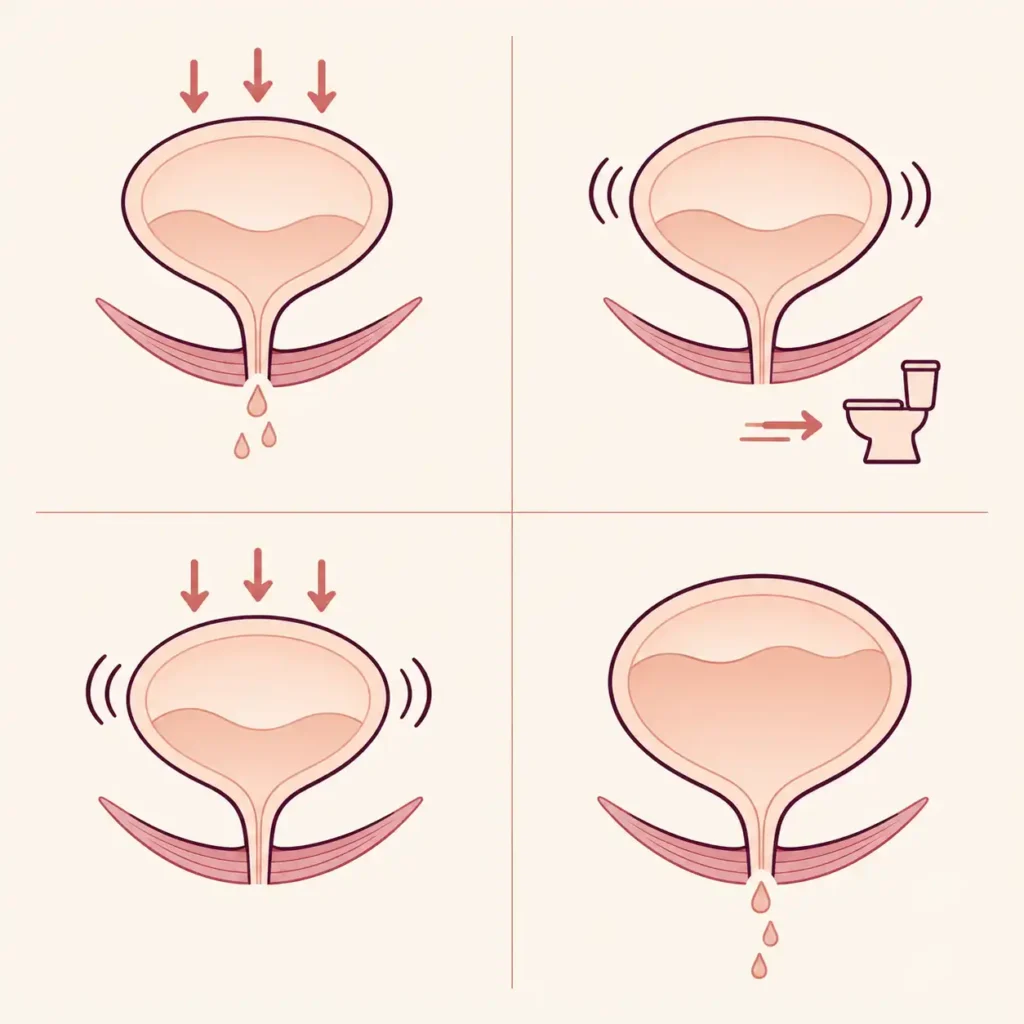
Urine escapes when pressure rises, like with a cough, laugh or lift. It often comes from weaker pelvic floor support.
A sudden, strong need to pass urine, sometimes before you reach the toilet. This is linked to an overactive bladder.
A bit of both.
Some leaks happen because the bladder doesn’t empty fully. A check-up can tell them apart.
Several things can add up. You may have more than one cause.
Doctors often start with simple steps, like habits, bladder training, exercises and sometimes medicines. If these aren’t enough, or you prefer another route, Dr. Manvi offers three procedures. [Confirm.] Each has different aims and risks.
Habits, bladder training and pelvic floor exercises. Where most women start.
A non-surgical option that uses laser energy.
Surgery that places a thin supporting tape.
Repair of weakened pelvic floor tissue.
A non-surgical treatment that uses laser energy inside the vagina. There are no cuts. [Confirm sessions, time per session, and comfort measures.]
May suit
Women with mild to moderate stress leaks who want a non-surgical route. Not suitable if you’re pregnant or have an active infection. [Confirm criteria and other exclusions.]
Recovery
Most women return to usual activities the same day. Avoid intimacy for 3 to 5 days. [Confirm.]
Recovery
Research on laser for urinary leaks is limited. The US FDA has said safety and effectiveness for this use are not established. Reported problems include burns, scarring and pain, including during intimacy. [Confirm risk list.] Dr. Manvi will explain the evidence and whether this fits you.
Surgery that places a thin tape under the urethra, like a small hammock. It supports the urethra when pressure rises, such as when you cough. With TVT, the tape passes behind the pubic bone. With TOT, it passes through the groin area. [Confirm which she uses, and the type of anaesthesia.]
May suit
Stress leaks when other steps haven’t helped enough.
Recovery
Many women go home the same or next day. [Confirm.] See Aftercare and Recovery below.
What the evidence says
Polypropylene mesh has been used in these slings since the 1990s, with robust evidence to support its use. But long-term safety data are patchy, and mesh has raised safety concerns in some countries. Studies report repeat surgery within five years in 0% to 19% of women after TOT and 0% to 13% after TVT. Ask Dr. Manvi about her own results and the tape she uses. [Confirm.]
Risks
Pain, bleeding, infection, trouble passing urine, new urgency, tape exposure or erosion, groin or thigh pain, leaks that return, and sometimes more surgery.
Surgery to repair weakened support tissue in the pelvic floor, and the area between the vagina and anus, called the perineum. This is often needed after childbirth. [Confirm exactly what it involves, and when she recommends it.]
May suit
Women with prolapse, childbirth damage, or a weakened perineum. On its own, it may not stop urinary leaks. [Confirm, and confirm how it helps leaks.]
Recovery
Follows the surgical timeline below unless Dr. Manvi advises otherwise. [Confirm.]
Risks
Pain, bleeding, infection, scarring, pain during intimacy, a narrower vaginal opening, changes in bladder or bowel function, and sometimes more surgery. [Confirm.]
Recovery depends on the path you choose. The hospital’s nursing team will guide you, and Dr. Manvi will give you a plan for your case. [Confirm.]
Laser therapy
Sling surgery
Weeks 1 to 2
Weeks 4 to 6
FAQ
It depends on your type of leak, your health, and your goals. Dr. Manvi will explain the options and risks and help you decide. You can also choose to wait.
Sometimes, especially if a short-term cause like an infection is treated. Many leaks continue without care. A check-up shows what’s going on.
Not always. Many women start with habits and exercises. Surgery is for selected cases, after a full talk about options and risks.
Technique matters. It’s easy to squeeze the wrong muscles. A trained professional can check and guide you.
Staying active is good for you. If exercise triggers leaks, we can help you find a way to keep going.
Lower oestrogen can affect the bladder and vaginal tissue. A doctor can check and suggest options.
Talk to Dr. Manvi first. Some treatments are better after you’ve completed your family. [Confirm.]
It depends on what you need and where. The hospital sets the fee. Ask for an estimate when you book. [Confirm.]
Your consultation is private. Visits happen in a hospital, and each hospital has its own privacy rules.
[Dr. Manvi Verma is a cosmetic gynecologist. She trained in obstetrics and gynaecology, then completed an M.Ch. in cosmetic gynecology at AIIMS.]
[She sees women for pelvic health, sexual wellness, aesthetic choices, skin and menopause care.]
[She believes every woman deserves clear answers and real choices. She also believes intimate health should be talked about openly.]
Start with a conversation. No pressure. No rush. We share your details with the hospital only to arrange your visit.
Lorem ipsum dolor sit amet, consectetur adipiscing elit, sed do eiusmod tempor incididunt ut labore et dolore magna…